
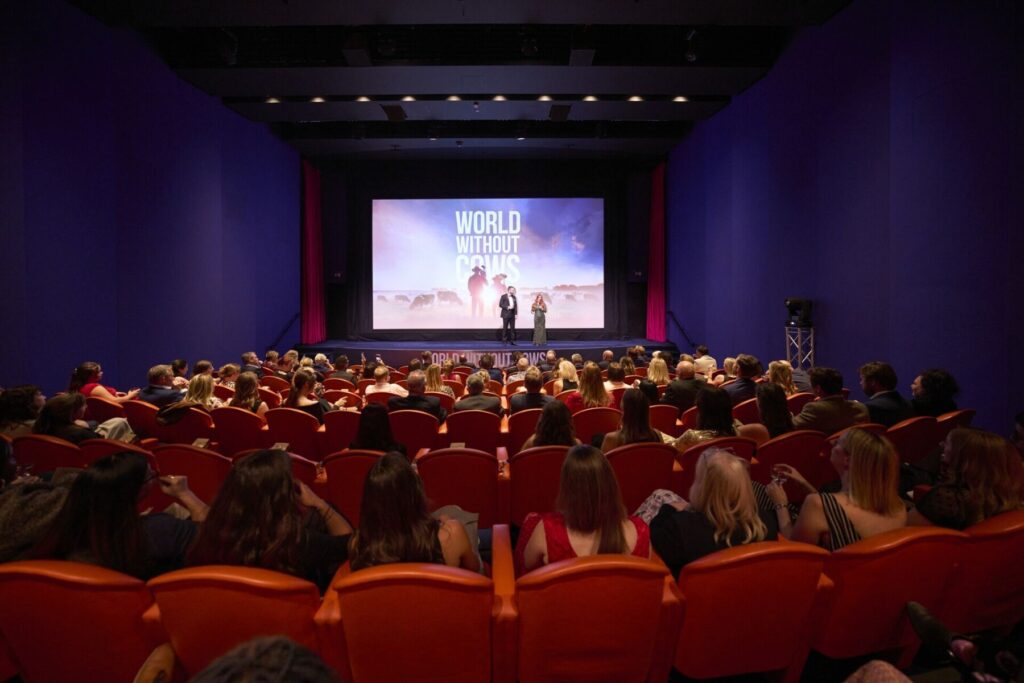
World Without Cows follows award-winning journalists Michelle Michael and Brandon Whitworth across five years and 22 countries, from the cattle-crowded streets of India to the drought-worn grasslands of Kenya, in pursuit of a question most people assume is already settled: What role should cows play in the future of our food, our communities, and our planet?
The London premiere, at the Ham Yard Hotel, was the second stop on the film’s global theatrical screening tour, following first showing in Dublin, and before travelling across the Atlantic to Los Angeles and New York City.
It was an interactive, town-hall-style forum to address the complex global food debate. Rather than presenting a simple, black-and-white argument about cattle farming, the screening challenged audiences to look past headlines and rethink the economic, environmental, and food-security consequences of a world entirely without livestock.
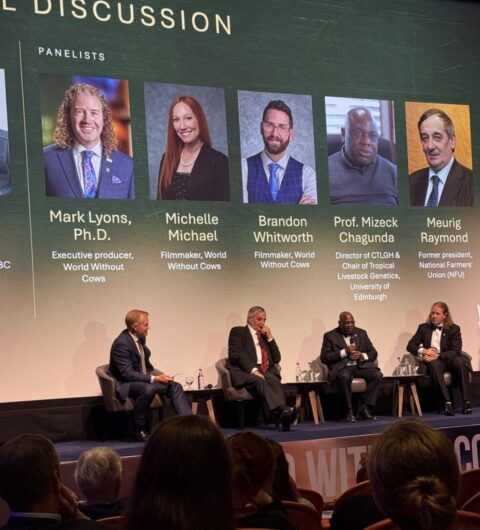
Expert Panel
Following the screening, Executive Producer, Mark Lyons, Ph.D., was joined on stage by moderator and farmer and BBC Countryfile presenter Adam Henson, and panelists Meurig Raymond, former President of the National Farmers’ Union, and Professor Mizeck Chagunda, Director of the Centre for Tropical Livestock Genetics and Health (CTLGH) and Chair of Tropical Livestock Genetics at the University of Edinburgh, who is also featured in the film.
“At the centre of the documentary World Without Cows is the question ‘Are we better off in a world without cows?’.
“In this context Cows are representing Livestock. Livestock are not just for food. Livestock sustain livelihoods, they sustain ecosystems, they are the thread that keep communities together.
“In some parts of the world, livestock are the only entity that can utilise the available land resources. In some communities, livestock are the difference between household survival and nothing.
“Yes, livestock contribute to environmental impact including climate change, however there are proven mitigation strategies based on animal genetics, animal nutrition, rumen microbiome genomics, animal health, animal husbandry practices, and forage genetics that can help.
“Indeed humans can acquire protein from other food sources but balanced nutrition is not just about protein, it’s about all the other essential nutrients. Cows have a vital role in that.
“We are better off in a world whose food systems are informed by scientifically proven approaches and this documentary emphasises that point.”
Professor Mizeck Chagunda, Director of the Centre for Tropical Livestock Genetics and Health (CTLGH)
Professor Mizeck Chagunda brought another important perspective, earning a round of applause for his call to introduce agriculture into education at a younger age. “We need young people to see the possibilities in this extraordinary field and choose it as their first choice, rather than a last resort.”
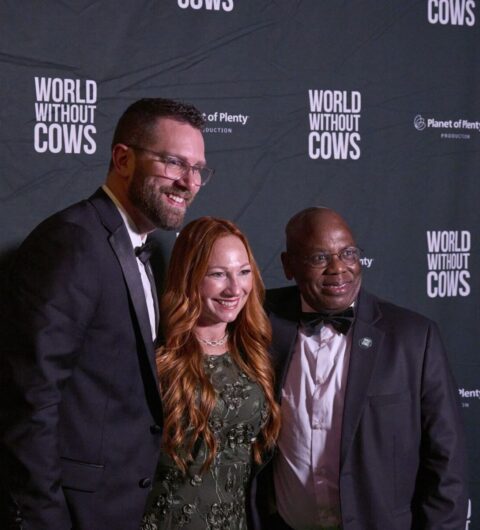
“I am grateful to Adam, Mizeck and Meurig Raymond, former President of the National Farmers’ Union, for joining me in a conversation that brought us back to why this project matters. I’m confident this won’t be our last collaboration together to progress our shared ambitions and passions.
“Thank you to everyone who joined us, and to the remarkable team whose work made our London premiere possible.
“We have spent five years bringing these stories to the screen. Now we have an opportunity — and a responsibility — to carry the conversation forward.”
Mark Lyons, President & CEO of Alltech, creator, commissioner, and executive producer of the World Without Cows documentary
Cows, climate and the future of our planet: it’s not black and white
World Without Cows will be shown on the big screen later this year. It is beautifully filmed and genuinely thought-provoking – tackling the role of livestock in our food and land systems.
- Directed By: Michelle Michael, Brandon Whitworth
- Written By: Michelle Michael, Brandon Whitworth, Josh Tickell
- Executive Producer: Mark Lyons, Ph.D.
Watch the Trailer
Help bring World Without Cows to more screens and more communities.
Please share it with colleagues, friends and family, and sign up for updates at worldwithoutcows.com.