
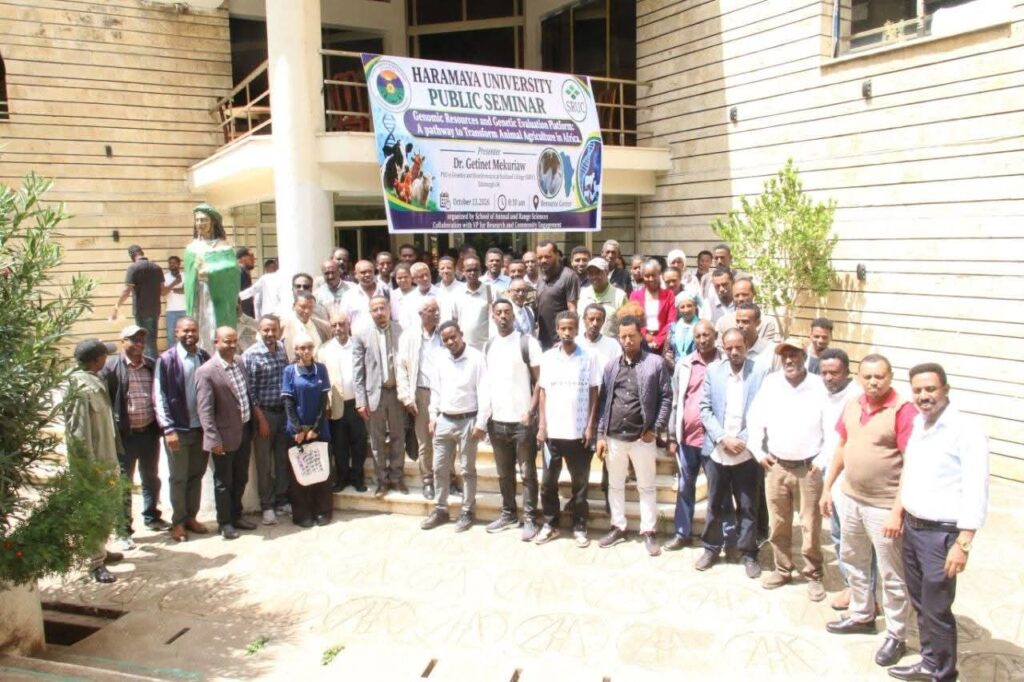
The Haramaya University seminar, organised by the University’s School of Animal and Range Sciences in collaboration with the Office of the Vice President for Research and Community Engagement, aimed to boost livestock productivity and modernise the sector’s operations through digital technology, with the goal of adopting international best practices for local implementation and revitalising the sector.
Sharing Expertise
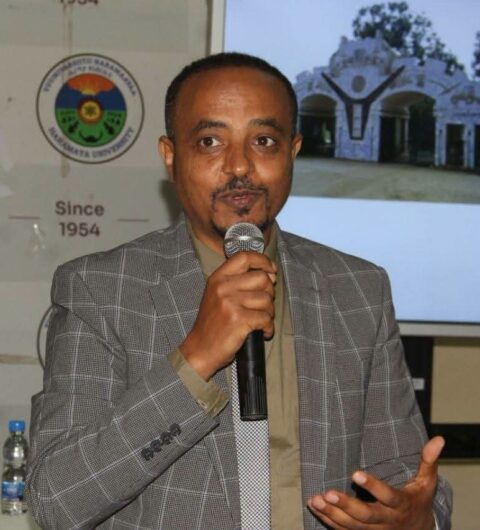
Invited to present was Dr. Getinet Tarekegn, an alumnus of the university and a leading geneticist and bioinformatician at Scotland’s Rural College (SRUC), a strategic partner of the Centre for Tropical Livestock Genetics and Health (CTLGH).
His collaborative research focuses heavily on the digitalisation and genomic orchestration of livestock data to accelerate animal breeding efficiency, particularly within developing agricultural systems.
Dr. Tarekegn, explained that developed nations have managed to improve animal breeds and achieve remarkable results in a short period by organising and integrating livestock data digitally. He pointed out that although Ethiopia ranks 10th in the world in livestock population, and possesses high genetic diversity, the country has not yet benefited as much as it should from the sector.
International Collaboration
The President of Haramaya University, Dr. Jemal Yousuf, affirmed that the university has long-standing experience in working collaboratively with research partners across various sectors. He confirmed that the university remains ready to swiftly evaluate and respond to upcoming partnership proposals to deliver impactful outcomes.
Dr. Yousuf added that as a ‘Centre of Excellence’, the university will provide the support necessary to achieve outstanding results in livestock research and other fields. He noted that they are working to bring tangible nation-wide change by drawing experiences from countries successful in animal agriculture and adopting modern practices.
To bring sustainable change to the industry, Dr. Getinet emphasised that key prerequisites include bridging skill gaps, formulating enabling policies, and establishing a digital data system where each animal is registered right from birth by scientifically identifying its traits.
Furthermore, he highlighted the importance of organising data in a centralised database, analysing it, and making scientific decisions based on feed, health, and productivity.
Dr. Tarekegn stated that if these practices are implemented, the country could replace imported animal products and create a high capacity for exporting products. He expressed his readiness to share his accumulated knowledge and skills with Haramaya University and to work in partnership.
Foundation for Development
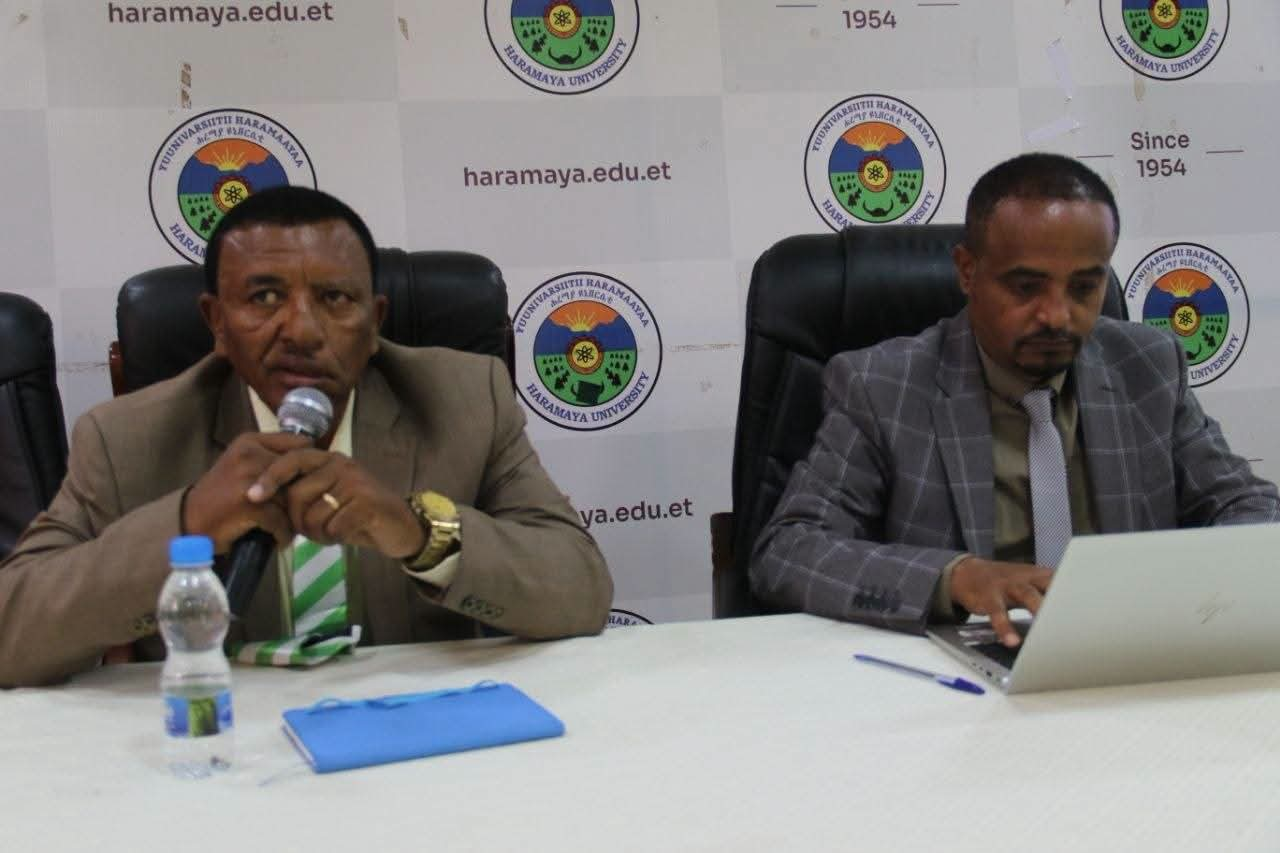
Dr. Yosef Tadesse, an Associate Professor of Animal Genetics and Breeding within the School of Animal and Range Sciences, explained that as a pioneer institution in Ethiopia, Haramaya University operates over ten livestock breeding centres.
Consequently, efforts are underway to significantly improve animal productivity by supporting the livestock database (established in 2018 EC / ~2025/2026 GC) with digital collection methods and animal performance tracking.
Dr. Tadesse stated that the school will work diligently to implement the gained international experience within the university’s farms and the surrounding community’s livestock resources.
Genetic Evaluation Platform
Dr. Getinet Tarekegn is a primary researcher for the Africa Genetic Evaluation Service (AGENES), a genetic and genomic evaluation pipeline for dairy cattle, developed by SRUC through CTLGH, a strategic partnership with Roslin Institute and International Livestock Research Institute (ILRI) which was launched recently at the International Livestock Research Institute (ILRI) campus in Addis Ababa.
Read more in SRUC Research Paper Africa GENetic Evaluation Service (AGENES): A pipeline for routine genetic and genomic evaluations (July 2026)
Credits
Reporter: Aweke Ayalneh
Photographer: Tewodros Lishan