
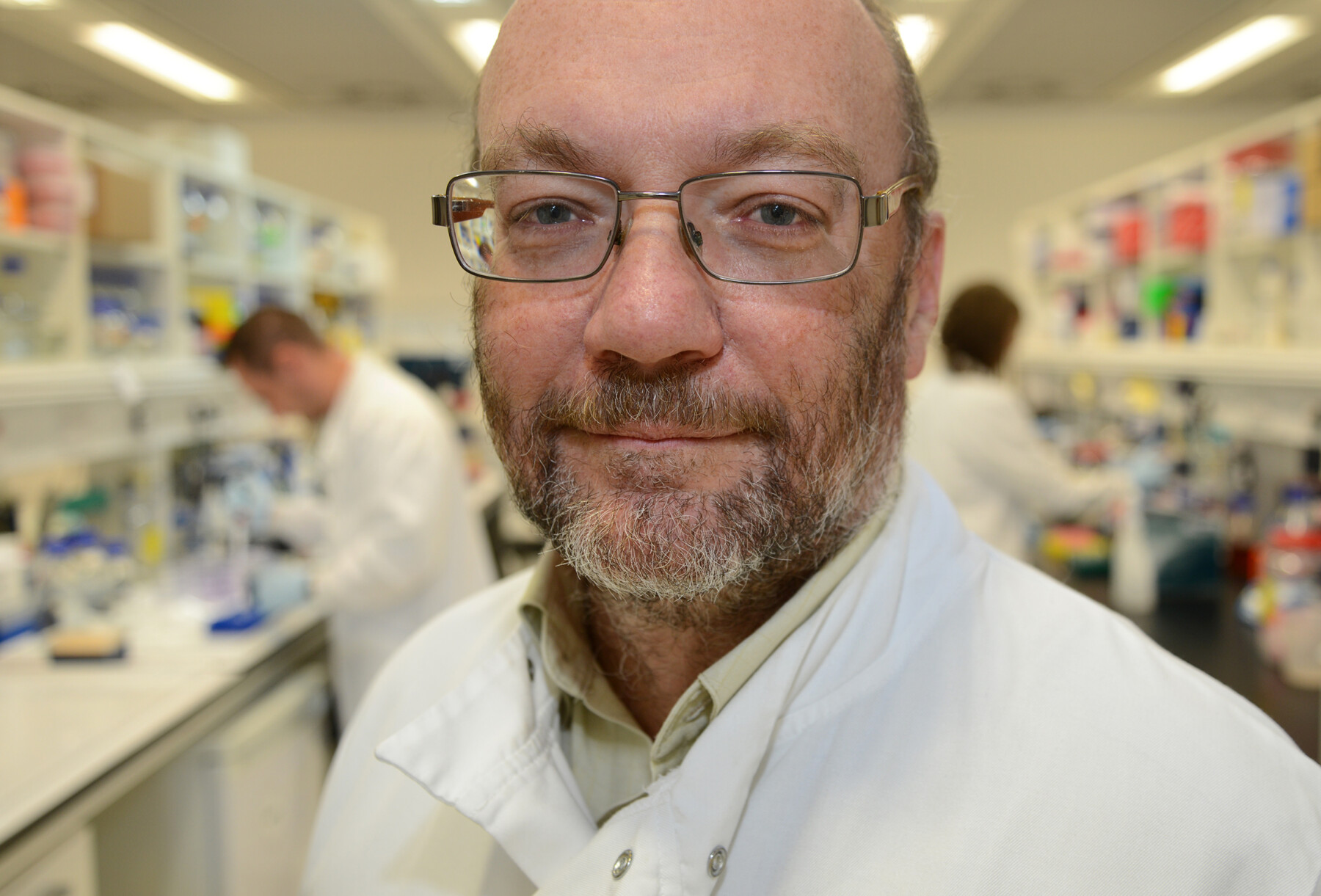
Professor Bruce Whitelaw is a pioneering animal biotechnologist and gene editing expert, who recently retired from a career spanning nearly four-decades at the University of Edinburgh’s Roslin Institute where he served as Director from 2022 until 2025, and was also a Principal of the Centre for Tropical Livestock Genetics & Health (CTLGH).
“Many congratulations to Professor Whitelaw on this highly prestigious and significant achievement. As a former member of the CTLGH’s Principals Group, representing the Roslin Institute, Bruce made a foundational contribution providing high-level oversight and strategic direction for CTLGH and its research programmes.”
Professor Mizeck Chagunda, Director, Centre for Tropical Livestock Genetics & Health (CTLGH), and Chair of Tropical Livestock Genetics, University of Edinburgh
Professor Whitelaw was a principal architect of CTLGH’s Vision 2030 strategy, which explicitly mapped out the Centre’s long-term roadmap to scale up animal biotechnology and drive genetic gains for smallholder farmers in low- and middle-income countries.
Distinguished career
Professor Whitelaw received a BSc degree in medical microbiology from the University of Edinburgh in 1982, and his PhD in 1987 from the University of Glasgow.
His doctoral thesis focused on the molecular biology of gene activation; a theme he maintained throughout his career in the development and application of gene expression systems in transgenic animals.
His first appointment was to the Agricultural and Food Research Council’s Animal Breeding Research Organisation, working on the then-novel idea of producing human pharmaceutical proteins in animal bioreactors. He subsequently held a research position at the Biotechnology and Biological Sciences Research Council’s Institute of Animal Physiology and Genetics Research.
Professor Whitelaw joined the Animal Breeding Research Institute, which went on to become the Roslin Institute, as a research scientist in 1986.
In 1994 he became a principal investigator, and in 2005 he was appointed Head of Developmental Biology, seeking to develop novel ways to tackle infectious disease in animals, evaluate new ways to study potential treatments of human disease, and enhance protein production in animals.
In 2013, he went on to become the Institute’s Deputy Director (Partnerships). He was interim Director from 2020 to 2022, when he was appointed Director of the Roslin Institute. He retired in 2025, having served the Institute for nearly 40 years.