
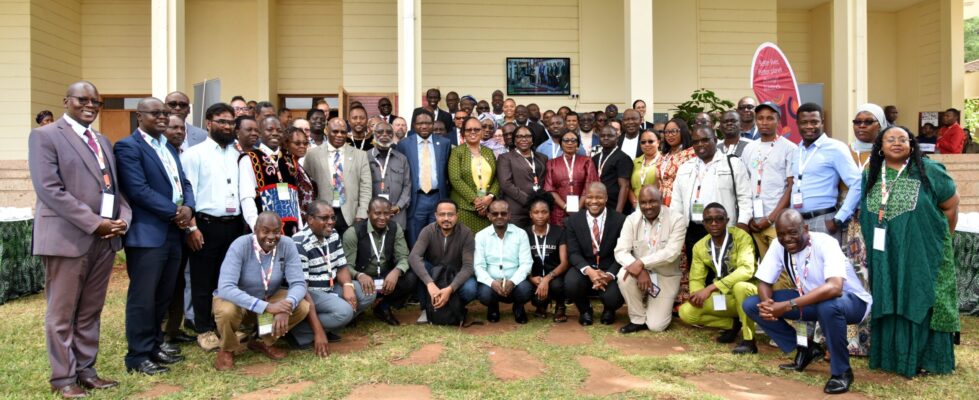
The official launch of the open-access Springer publication took place on 20th February, 2026, at the International Livestock Research Institute (ILRI) Campus in Nairobi, Kenya.
Jointly convened by the African Animal Breeding Network (AABNet), the Centre for Tropical Livestock Genetics and Health (CTLGH), and ILRI, the full-day event celebrated outstanding contributions to animal genetic resources in Africa and stimulated dialogue on advancing livestock productivity through sustainable breeding and genetic innovation.
“What a beautiful occasion of celebrating science, and capacity building it was! An occasion where the fruits of resilience and strong collaboration were exemplified. Thanks to all those involved.”
Professor Mizeck Chagunda, Director, Centre for Tropical Livestock Genetics & Health (CTLGH)
The book was started in late 2020 by a multidisciplinary team of livestock researchers, involving 83 contributing authors, professionals, and experts from animal science, animal breeding, genetics, genomics, and other science disciplines, from 24 countries, all aspiring to pool effort in AABNet to transform African livestock production systems.
It consolidates decades of African-led research on livestock genetics, breeding, adaptation and conservation, and offers a comprehensive guide covering livestock species across the continent along with breeding, feeding, health management, production systems and future technological needs.
“This book is our foundational text. One that helps professionalize animal breeding in Africa, combat genetic erosion, and ensure farmers have access to productive, trusted and adapted animals.”
Ed Rege, Chair of AABNet Executive Committee
A resilient and diverse livestock, under threat
Africa hosts roughly one-third of the world’s livestock population and is home to exceptional genetic diversity, including hundreds of indigenous breeds of cattle, sheep, goats, poultry, camels, donkeys and rabbits. These locally adapted animals have evolved over generations to withstand heat, disease pressure, variable feed availability, and low-input systems—conditions that define most African production environments and are intensifying under climate change.
Despite this, many indigenous breeds are declining or facing extinction. Indiscriminate crossbreeding with exotic animals, often promoted in the name of productivity, has eroded unique adaptive traits that make local breeds valuable in the first place. While indigenous animals may produce less per animal, they often perform better overall for smallholder farmers because they survive longer, require fewer inputs, and cope better with stress and disease.
The book argues that improving genetics, animal health and management together is a proven pathway to raise productivity while reducing greenhouse gas emissions per unit of output delivering both climate mitigation and food security benefits.
“Africa’s livestock genetic diversity is not just a heritage, it is a climate and development tool. With science-based breeding strategies, we can improve productivity, enhance resilience, and reduce emissions intensity across African livestock systems.”
Appolinaire Djikeng, Director General, ILRI
Africa has historically undervalued its indigenous breeds according to him, favouring exotic animals that require high levels of feed, veterinary care and capital. This is despite the fact that in many low-income and climate-stressed settings, locally adapted breeds deliver higher overall returns when survival, costs and risk are taken into account.
The book emphasizes that successful genetic improvement programmes must be rooted in African production systems and farmer priorities. It calls for breeding objectives that balance productivity with adaptation, integrate farmers into decision-making, and strengthen institutions for data collection, genetic evaluation and long-term monitoring.
“Local breeds are the backbone of climate-resilient African agriculture.
Protecting and sustainably using these breeds through targeted breeding is essential if we are to safeguard livelihoods and meet the challenges of climate change.”
Professor Mizeck Chagunda, Director, Centre for Tropical Livestock Genetics & Health (CTLGH)
It also explores emerging opportunities in genomic selection, reproductive technologies and gene editing, while stressing that advanced tools must complement not replace strong institutions and practical management.
Partners behind the book say its release marks a step toward a more coordinated African approach to livestock genetic improvement and conservation. Priorities include multi-country genetic evaluation, professional capacity building in animal breeding, stronger data systems, and partnerships that can scale successful breeding programmes.
“Conserving and using Africa’s indigenous livestock genetic resources is a matter of climate and development security.
“Strategic investments in breeding and farmer-centred approaches will drive resilient livestock systems for Africa’s future.”
Huyam Salih, Director of AU-IBAR
“We’re pleased to see the continued work of the African Animal Breeding Network in strengthening livestock genetics and breeding capacity across Africa.
“African-led collaboration and scientific capacity building are key to developing resilient, sustainable livestock systems – an approach we strongly support.”
Roslin Foundation
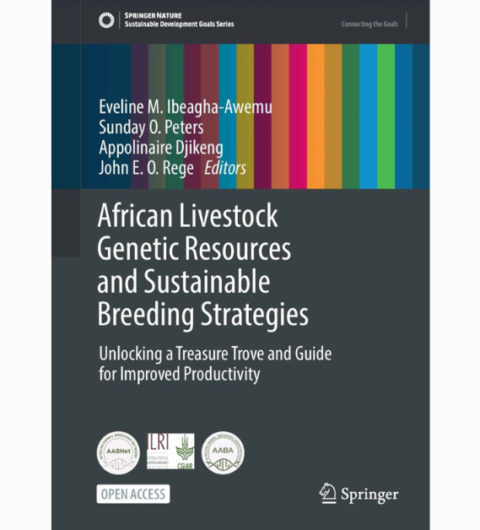
African Livestock Genetic Resources and Sustainable Breeding Strategies: Unlocking a Treasure Trove and Guide for Improved Productivity
The book is open access and available for download, serving as a practical reference for policy, research, and training across Africa and globally.
Download the full open-access guide here https://link.springer.com/book/10.1007/978-3-031-92076-9