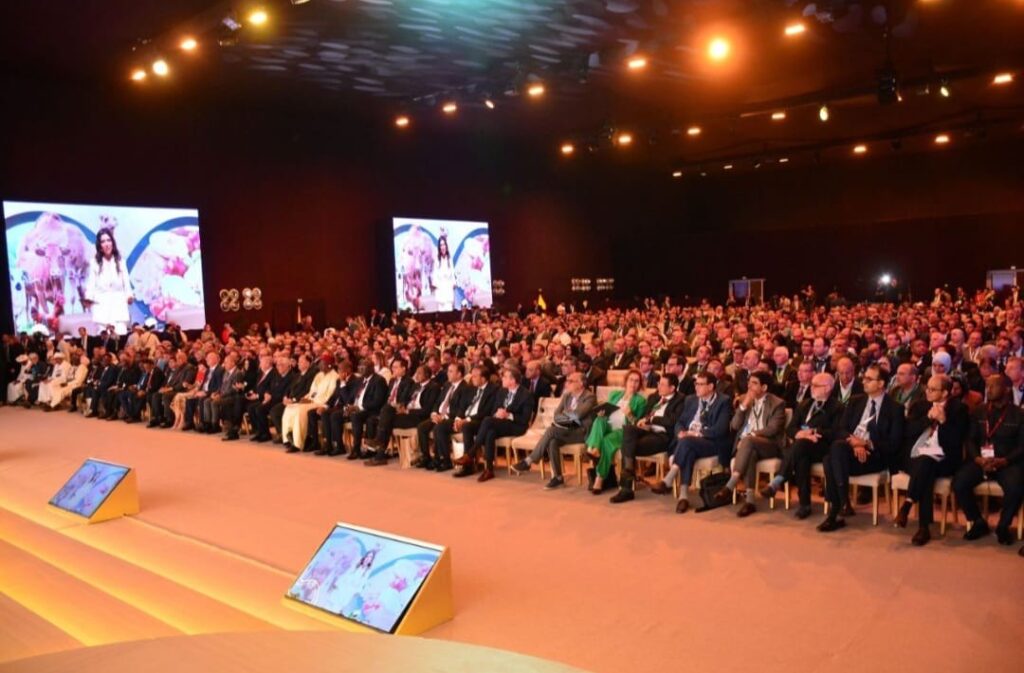
This major agricultural event, under the High Patronage of His Majesty King Mohammed VI of Morocco, hosted over 70 countries and 1,500+ exhibitors, providing an excellent opportunity to connect and discuss the future of farming.
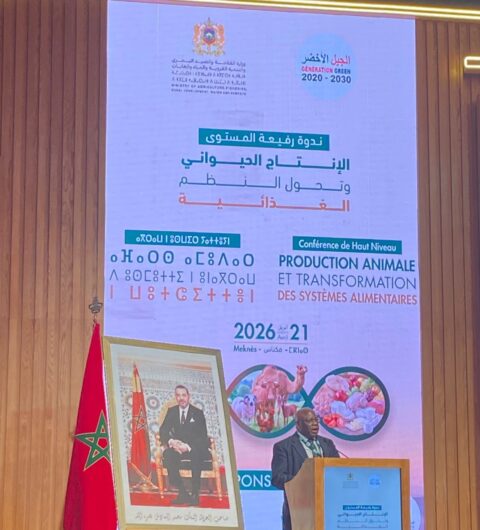
The Ministry of Agriculture, Fisheries, Rural Development, Water, and Forests hosted a high-level international conference as a side event to SIAM on Tuesday 21st April and it was with great honour, the Director of CTLGH, Professor Mizeck Chagunda, was invited to participate as a speaker, presenting on the topic ‘Genetics and Resilience to Multiple Challenges’.
African livestock resilience is driven by high genetic diversity, offering natural resistance to heat, diseases, and drought. Leveraging indigenous breeds through genomic tools allows breeders to combine hardiness with productivity.
Key challenges include limited data systems, high costs, and low infrastructure for genetic evaluation.
“As an animal scientist, it is not everyday you get invited to speak in a room with more than a thousand people and also with Cabinet Ministers of Livestock from more than five countries.
“I am really grateful to the organisers for the invitation, and for all the logistics and hosting. It was a true pleasure to participate in the high-level side-event and panel discussion. Together, we can!”
Professor Mizeck Chagunda, Director, Centre for Tropical Livestock Genetics & Health (CTLGH), and Chair of Tropical Livestock Genetics, University of Edinburgh
Panel Discussion
In recognition of Professor Chagunda’s expertise in the field of livestock genetics, the Professor also contributed in a panel discussion on livestock resilience, ‘Animal Production and the Transformation of Food Systems’.
‘What is the role of genetic improvement and resilience in dealing with these challenges in the African livestock system?’
This was the question posed to the Panel and the focus of discussion which highlighted that similar to any high security deposit box, the African livestock treasure trough cannot be unlocked with only one simple key. For example, feeding alone cannot unlock the contribution of African livestock to the global and local challenges.
We need keys with multiple revolutions to “release the bolt”. Feeding is one, genetic improvement is the other, good veterinary services and good husbandry practices are all important ‘turns of the revolution’ of this key.
Africa is a “treasure chest” of biodiversity, where livestock acts as a self-replicating asset that offers “quiet wealth” – providing food security, income, insurance, and cultural status to millions of smallholder farmers and pastoralists, particularly in rural areas.
Leveraging advanced genetic methodologies to improve livestock productivity and resilience research are helping to tackle issues that limit the contribution of livestock to food security, poverty alleviation and environmental sustainability – this is where investment in genetic improvement will show its additive and cumulative advantage.
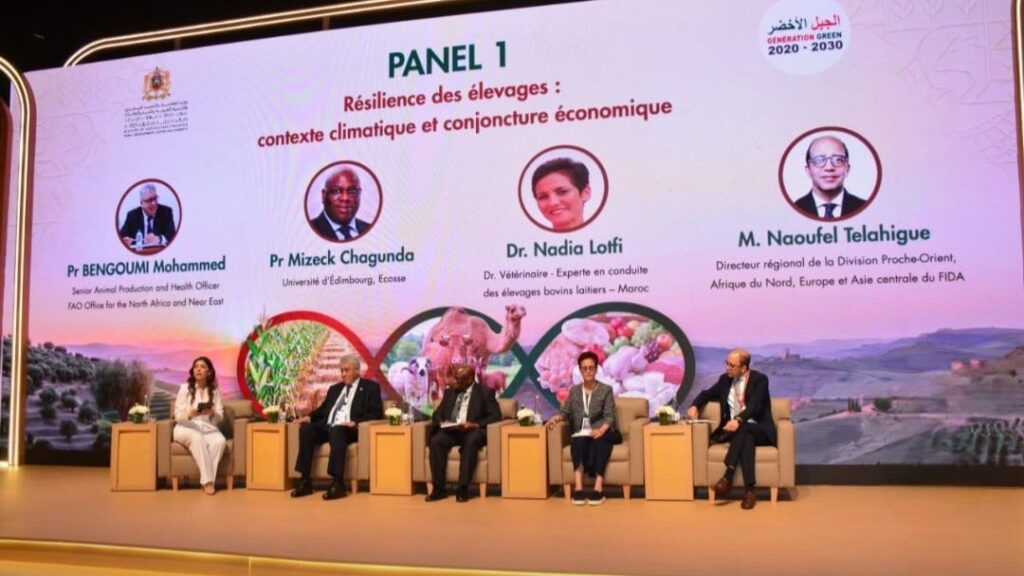
“It was a privilege to be part of the Panel Discussion at the 18th Edition of the International Agricultural Show in Morocco SIAM2026.
“African animal genetic resources are a distinct treasure trough, full of diverse and robust breeds that have evolved in their environments over thousands upon thousands of years.
“Through responding to different environments and environmental changes; genetic exchange and admixture processes; and pastoral, farmer, and keeper decisions, tropical livestock has acquired adaptational and resilient traits in the ecological systems where they perform.
“With the current and ongoing global challenges of climate change, biodiversity loss, antimicrobial resistance, water scarcity, and excessive atmospheric carbon dioxide, livestock production is under pressure. These challenges bring with them issues like heat stress, water stress, reduced feed utilisation efficiency, low productivity and increased disease incidences including zoonoses.”
Professor Mizeck Chagunda, Director, Centre for Tropical Livestock Genetics & Health (CTLGH), and Chair of Tropical Livestock Genetics, University of Edinburgh