
Biodiversity isn’t only wildlife and forests. It’s also lives in Africa’s cattle, goats, sheep and chickens, which have adapted over generations to heat, drought and disease. Rangelands cover over 50% of the Earth’s land surface and sustain two billion people – yet they remain under represented in global climate and biodiversity agendas.
Together at CBD COP17, from 19th – 30th October 2026, the International Livestock Research Institute (ILRI) and the Centre for Tropical Livestock Genetics and Health (CTLGH), brought livestock genetic diversity, pastoralist rights, and rangeland restoration to the forefront.
From cells to landscapes
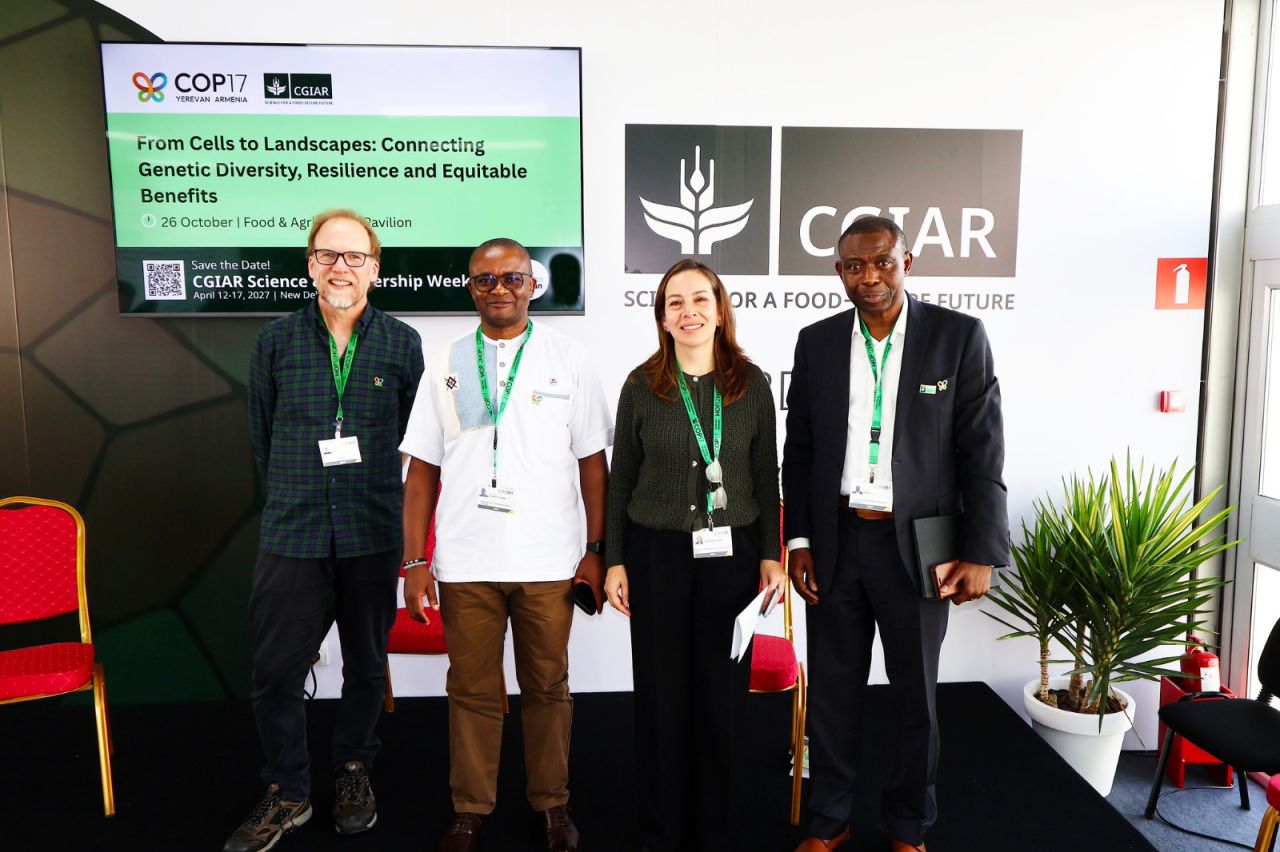
At the Food and Agriculture Pavilion, the ILRI and CTLGH hosted ‘From cells to landscapes: Connecting genetic diversity, resilience, and equitable benefits’.
The session asked one question: What can CGIAR science offer the countries and communities already conserving biodiversity, and who benefits?
Three CGIAR scientists each shared one practical example:
- Marcela Quintero – Alliance of Bioversity International and CIAT, on crop diversity, seed systems, and resilient landscapes.
- Christian K. Tiambo – ILRI and CTLGH, on locally adapted livestock, adaptive traits, and biobanking
- David Jonathan Mills – WorldFish, on aquatic genetic diversity and resilient blue food systems.
Cargele Nduwamungu Masso moderated the discussion that followed. Country and community participants discussed how genomics, biobanking, and data science can work alongside Indigenous and local knowledge. They also asked what participation, capacity, and benefit-sharing arrangements will help the people who conserve this diversity share in what science makes possible.
Safeguarding livelihoods and biodiversity
Christian K. Tiambo, CTLGH / ILRI Scientist – Lead Cellular Resources, Functional Genomic tools and Biotechnology Programme, presented at a high-level side event ‘Safeguarding livelihoods and biodiversity while strengthening nutrition security through equity and diversified protein sources’.
Christian discussed priority solutions across the livestock sector. These priorities are mutually reinforcing and collectively transformative as a practical pathway for implementation, accountability, and measuring what matters – safeguarding livelihoods and biodiversity while strengthening nutrition sovereignty, equity, and diversified protein sources.
Transforming our food systems requires us to:
- Recognise livestock genetic resources as an integral component of biodiversity and sustainable development.
- Place farmers, pastoralists, and IPLCs at the centre of conservation and decision-making.
- Connect biodiversity conservation with climate action, ecosystem restoration, and nutrition security.
- Promote diversified protein sources that respect local food cultures, ecological realities, and nutritional needs.
- Ensure that science, innovation, finance, and global governance deliver equitable benefits to the countries and communities that sustain these resources.
“I am honoured to join an outstanding panel featuring Hon. Issifu Seidu, Delphine Babin-Pelliard, Lasse Bruun, Joao Campari, and Eeva Primmer, bringing together perspectives from government, research, conservation, and sustainable food systems. Protecting biodiversity and strengthening nutrition security must go hand in hand.
“Let’s move from recognition to integration, from commitments to implementation, and from biodiversity conservation to measurable benefits for people and nature.”
Christian K. Tiambo, Scientist – CTLGH/Livestock Genetics
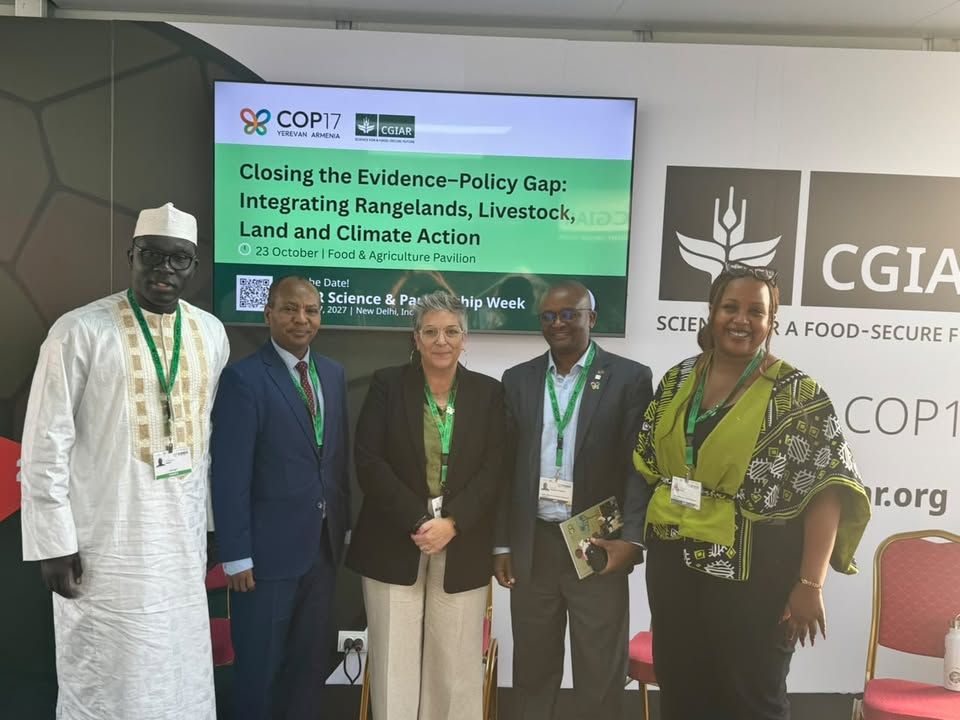
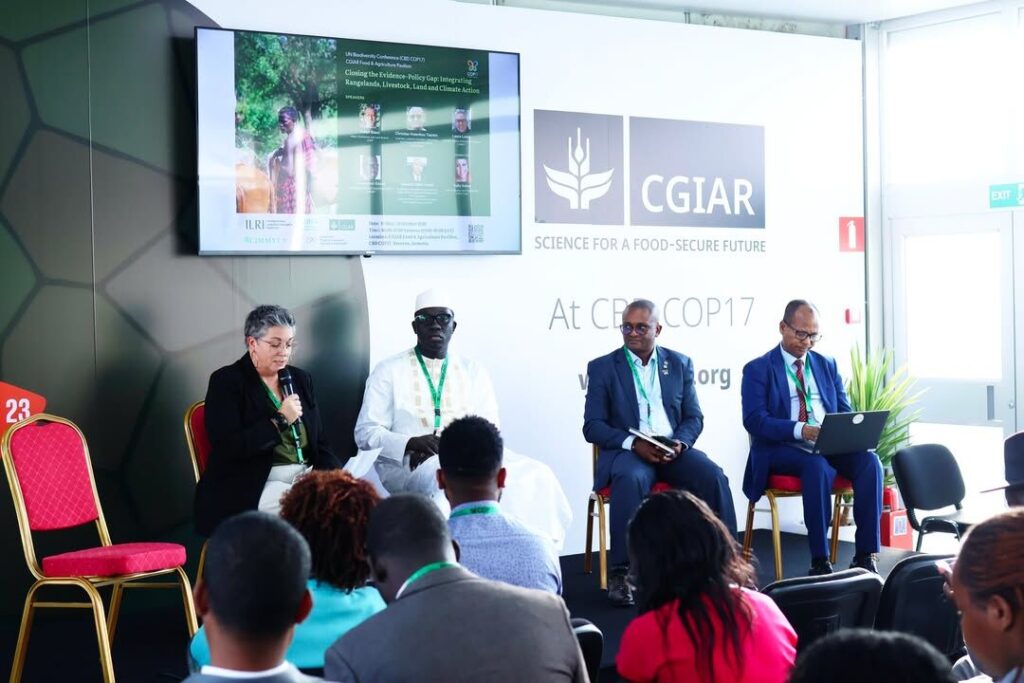
Closing the Evidence – Policy Gap
How do we turn scientific evidence into coordinated policies that protect biodiversity, restore landscapes and strengthen pastoral livelihoods?
This high level dialogue brought together leading voices connecting livestock biodiversity, rangeland restoration, and environmental policy, climate resilience, and Indigenous and local knowledge.
Speakers:
- Julian Blanc – United Nations Environment Programme Finance Initiative (UNEP FI)
- Christian K. Tiambo – International Livestock Research Institute (ILRI)I / CTLGH
- Laura Lewis – CIMMYT
- Ousseynou Kassé – Chair, African Group of Negotiators (AGN), Senegal
- Dr. Gemedo Dalle Tussie – Former Minister of Environment, Forest and Climate Change, Ethiopia
Moderated by Sally Mueni Katee Katee – International Livestock Research Institute (ILRI) / CTLGH
This session convened in the spirit of collaboration across International Livestock Research Institute (ILRI), United Nations Environment Programme Finance Initiative (UNEP FI), CGIAR, CIMMYT, CTLGH, and the African Group of Negotiators (AGN). It explored practical ways to align National Biodiversity Strategies and Action Plans (NBSAPs), Land Degradation Neutrality targets, National Adaptation Plans and Nationally Determined Contributions (NDCs), bridging evidence, policy, financing and implementation across the Rio Conventions.
The goal was integrated policies, resilient landscapes and sustainable pastoral livelihoods.
Takeaways from CBD COP17
Local breeds are climate lifelines: Indigenous livestock carry key genetic traits that help pastoralists survive and recover from severe climate shocks.
Policy synergy is key: We must connect National Biodiversity Strategies (NBSAPs), NDCs, and Land Degradation Neutrality targets.
Support pastoral stewards: True landscape resilience relies on safeguarding seasonal herd mobility and indigenous knowledge.
Our presence at the conference focuses on a critical aspect of global ecosystems: the profound importance of local and indigenous livestock as an integral part of global biodiversity.
Thank you to our delegation, Christian Keambou Tiambo, Scientist-CTLGH/Livestock Genetics: Reproductive Technologies & Precision breeding, Biobanking management, and ABS-Nagoya Protocol and Sally Katee, Research Officer – Research Compliance, Policy and Engagement (ILRI, Kenya).